$101% Did $2.8M in Volume, Attracted 35,000 Transactions, Then Crashed 81% — One Wallet Holds 52% of Supply
An education-meets-AI meme that generated more volume in 19 hours than most tokens see in a week. The narrative was layered. The concentration was fatal.
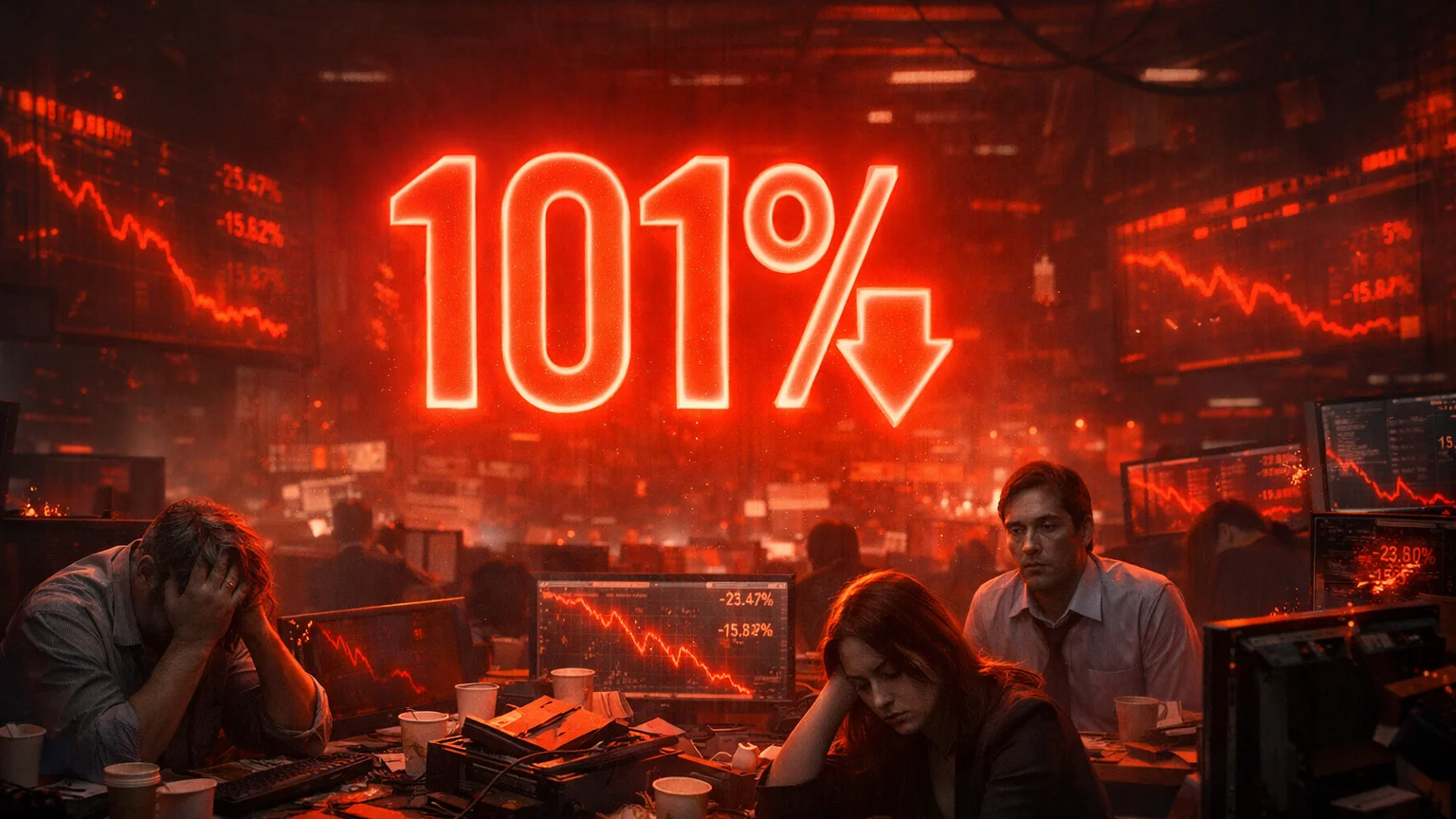
Somewhere around 3:00 AM UTC on March 15, a token called 101% launched on pump.fun with a pitch that actually sounded different: crypto education meets AI, community-driven learning, a narrative factory that was trying to be more than a meme. Nineteen hours later, the market cap has collapsed from its peak to $7,000, the price is down 81%, and one wallet still holds 52% of the entire supply. The education lesson this token delivered wasn't the one it intended.
- → 101% generated $2.8M in volume and 35,904 transactions in 19 hours — then cratered 81% to a $7K market cap
- → A single wallet controls 52.24% of total supply — the kind of concentration that makes dumps inevitable, not speculative
- → The education+AI narrative attracted massive retail interest, but the on-chain structure was a textbook extraction setup
What Made This One Attractive
Credit where it's due: 101% had a better story than 99% of pump.fun launches. The concept blended crypto education with AI tools and community engagement — a multi-layered narrative that gave people something to believe in beyond "frog go up." The project had a website (101percent.fun), an X account (@101percent_coin), and a Discord server. It looked like it was trying.
flagged it as a "narrative factory" attempting to escape pure meme status, and that assessment was accurate. The 7.5/10 narrative strength score reflected something real: this token had talking points. Crypto education is a sympathetic narrative. AI integration is a hot keyword. Combined, they created enough surface-level legitimacy to pull in retail buyers who wanted to believe they were early on something meaningful.
And pull them in it did. In 19 hours, 101% processed 35,904 transactions — 22,504 buys against 13,400 sells. The buy ratio of 62.7% held strong through the pump phase. Volume hit $2.8M, a number that would be respectable for tokens ten times this market cap. The activity was genuine. The interest was real. What wasn't real was the distribution.
The Numbers That Tell the Real Story
Look at those numbers and do the math. $2.8M in volume against a current market cap of $7,000. That means the token's entire market cap has turned over roughly 400 times. That's not organic trading — that's a liquidity extraction machine. Money flowed in from retail, and money flowed out to whoever was positioned to sell into the demand.
The volume-to-liquidity ratio is even more telling. $2.8M in volume against $7.4K in remaining liquidity. The pool has been drained. There's effectively nothing left for sellers to sell into at any meaningful scale. Anyone still holding 101% tokens is holding a receipt for a lesson in market structure.
What the On-Chain Data Shows
The Rugcheck data tells a story that should have been the first thing anyone checked. One wallet — address AJSFJ5yC5GhmhuhWnrphCrzxug51tFfBeJ1ih2YvMuao — holds 52.24% of the total token supply. The second-largest wallet holds 4.24%. The third holds 3.48%. Combined top-3 concentration: 60%.
Let that sink in. Sixty percent of this token's supply sits in three wallets, with over half in a single address. This isn't a community token with unfortunate concentration — this is a token where one entity controls the market. When that entity decides to sell, there is no support level. There is no floor. There is only whatever liquidity remains in the pool, and at $7.4K, that answer is: almost nothing.
The Rugcheck score is 16 — technically "low risk" — because the automated scanner checks for freeze authority (none), mint authority (none), and basic contract safety. Those are clean. But Rugcheck's score doesn't weight holder concentration heavily enough for situations like this. A technically safe contract controlled by one wallet is functionally identical to a rug: when they sell, you lose.
The Anatomy of the Pump
Here's how this played out. 101% launched with an attractive narrative and functional socials — enough to stand out from the noise on pump.fun. Early buyers entered at micro-cap prices, driven by the education+AI angle. Word spread. The buy ratio stayed above 60%. Volume climbed. The market cap pushed higher. At some point during the pump, the token attracted enough liquidity for the majority holder to begin selling.
The 81% crash wasn't a single event — it was the inevitable result of sustained selling from a wallet that holds more than half the supply selling into a shallow pool. Each sell drained liquidity. Each liquidity drain made the next sell hit harder. By the time retail realized what was happening, the market cap had compressed from its peak to $7K and the pool was nearly empty.
The 35,000 transactions weren't the sign of a healthy market. They were the sound of 22,000 buyers providing exit liquidity for someone who was always going to sell.
The Narrative Trap
What makes 101% worth covering isn't the loss — tokens crash on pump.fun every hour. It's the mechanism. This token succeeded specifically because it had a better story. The education+AI angle gave retail buyers a reason to hold through early volatility, to tell themselves this one was different, to wait for the "real" pump instead of taking quick profits. That patience — that belief in the narrative — is what kept the buy ratio elevated long enough for the majority holder to extract maximum value.
Better narratives don't reduce risk. They increase the surface area for extraction. A token with no story gets pump-and-dumped in 20 minutes and nobody loses more than a few dollars. A token with a story — with a website, a Discord, a multi-layered thesis about education and AI — gives people a reason to stay. And the longer they stay, the more efficiently the concentrated holder can sell.
Lessons From the Wreckage
First: check holder concentration before you check the narrative. A 52% single-wallet position is visible on-chain to anyone who looks. It takes thirty seconds on Rugcheck or Birdeye. No narrative — no matter how sophisticated — overrides the physics of a single wallet controlling majority supply.
Second: volume is not validation. $2.8M in volume sounds impressive until you realize it's measuring the speed at which value is being extracted, not the depth of genuine market interest. High volume on a concentrated token is a sell signal, not a buy signal.
Third: the buy/sell ratio can lie. 62.7% buys looks bullish in isolation. But when the sells are coming from a single wallet that holds majority supply, the ratio is measuring how many small buyers are being absorbed by one large seller. The crowd can be buying while the house is emptying.
🔴 Shill Alert — 101% is a textbook case of narrative-enhanced extraction. The education+AI story was compelling enough to generate 35,000 transactions and $2.8M in volume, but the on-chain reality was always the same: one wallet held 52% of supply, and when that wallet sold, the token died. Market cap has collapsed to $7K. Liquidity is $7.4K. There is no recovery path here. The token served its purpose — as exit liquidity for whoever controlled that majority wallet. If you're still holding, the math says cut. If you're watching from the sideline, the lesson is worth more than any trade: always check concentration before you check the story.
What is 101% crypto token?
101% is a Solana-based meme token launched on pump.fun on March 15, 2026, that blended crypto education and AI narratives. It attracted $2.8M in volume before crashing 81% due to extreme holder concentration — a single wallet controlled 52% of total supply.
Why did 101% token crash?
The crash was driven by a single wallet holding 52.24% of the token supply selling into a shallow liquidity pool. Despite strong retail buying interest (35,000+ transactions), the concentrated selling drained available liquidity and collapsed the price from its peak to a $7K market cap.
Is 101% token a rug pull?
While the contract itself had no freeze or mint authority (Rugcheck score 16), the 52% single-wallet concentration functionally enabled the same outcome as a rug pull. The majority holder could — and apparently did — sell into retail demand, extracting value without triggering any smart contract red flags.
How to check if a meme coin is safe before buying?
Always check holder concentration on Rugcheck or Birdeye before entering any meme token position. Look for top-wallet percentages (anything above 20% single-wallet is high risk), freeze/mint authority flags, and the volume-to-liquidity ratio. If volume is dramatically higher than liquidity, someone is extracting value.